
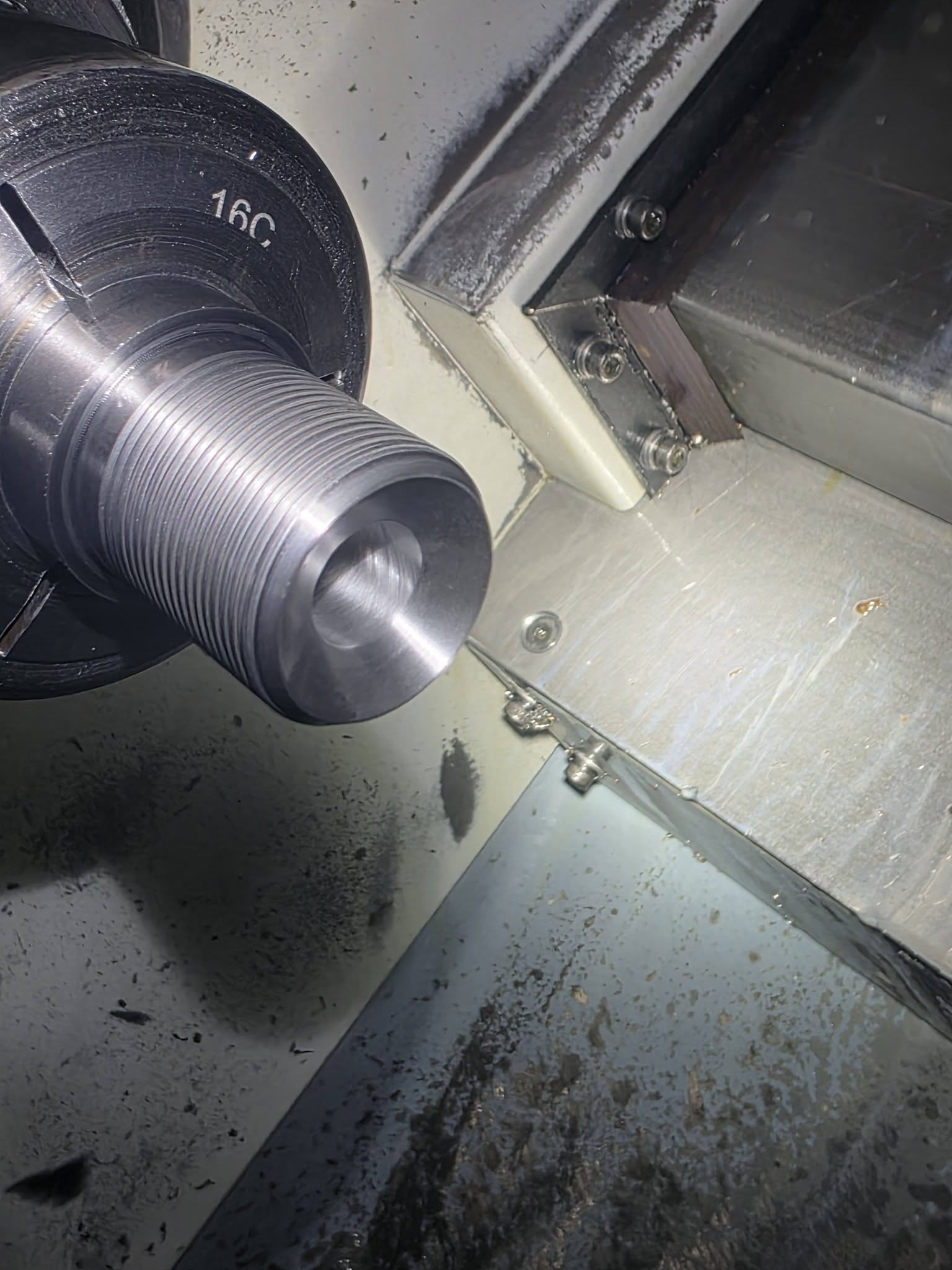
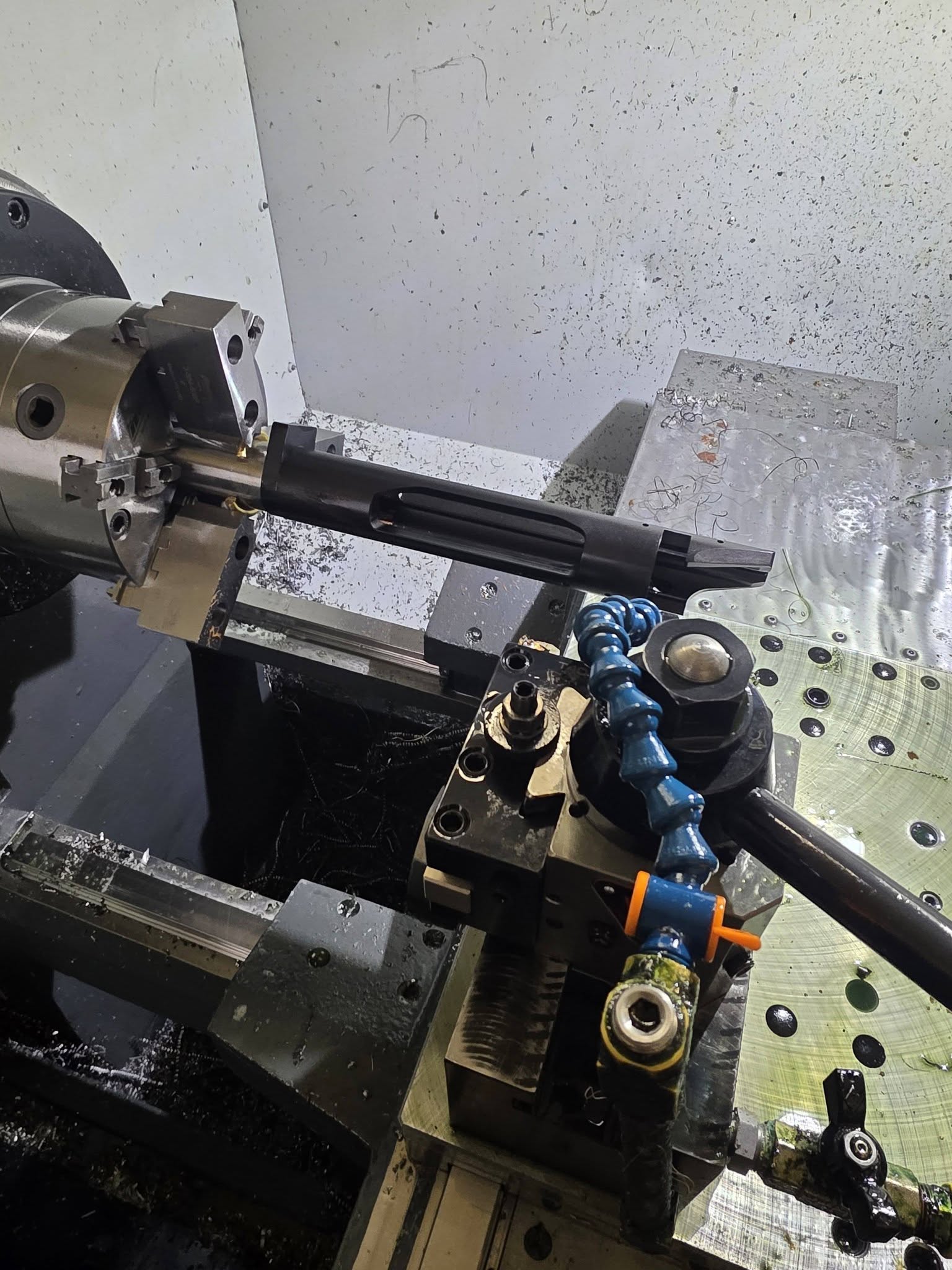
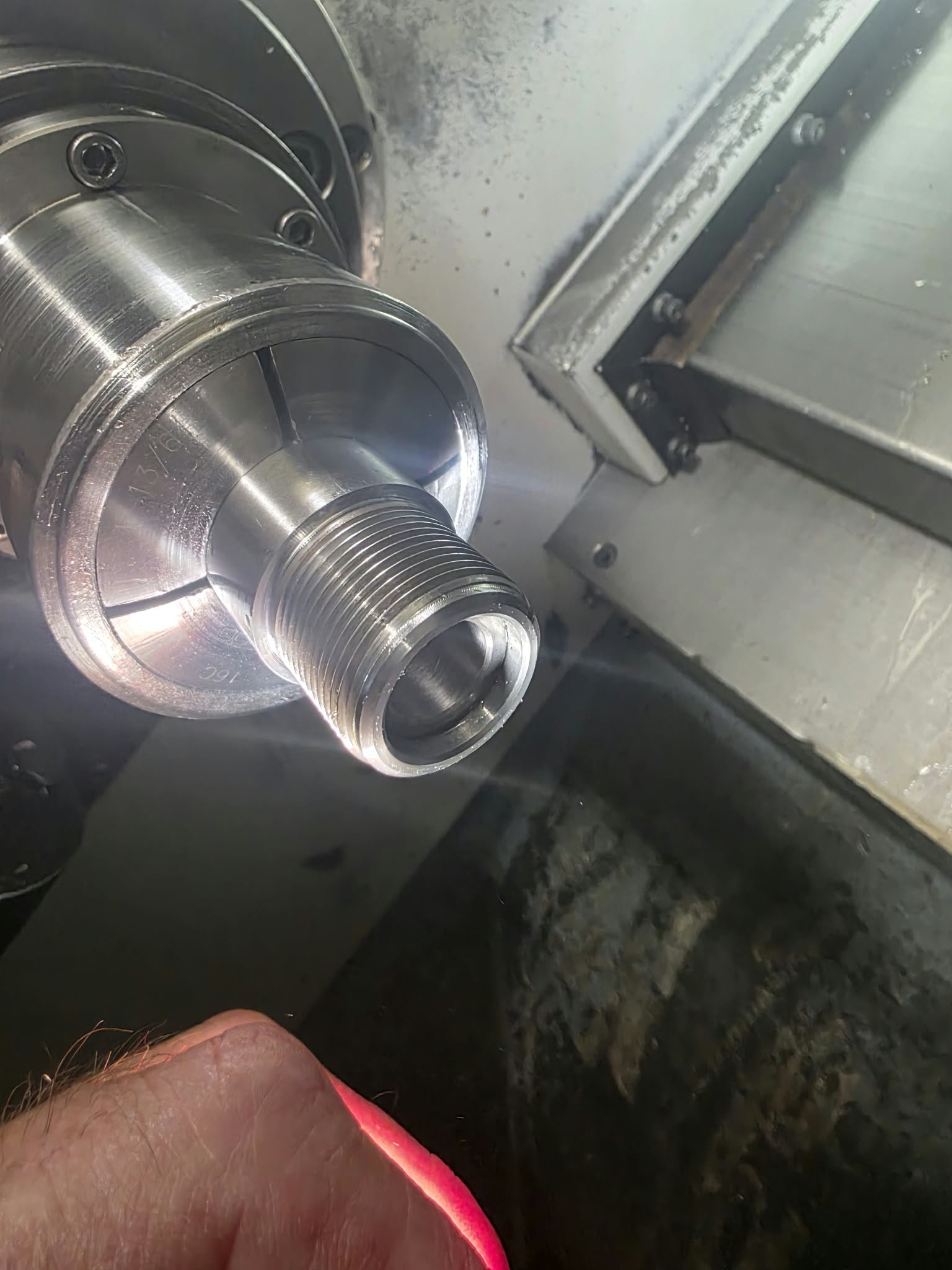
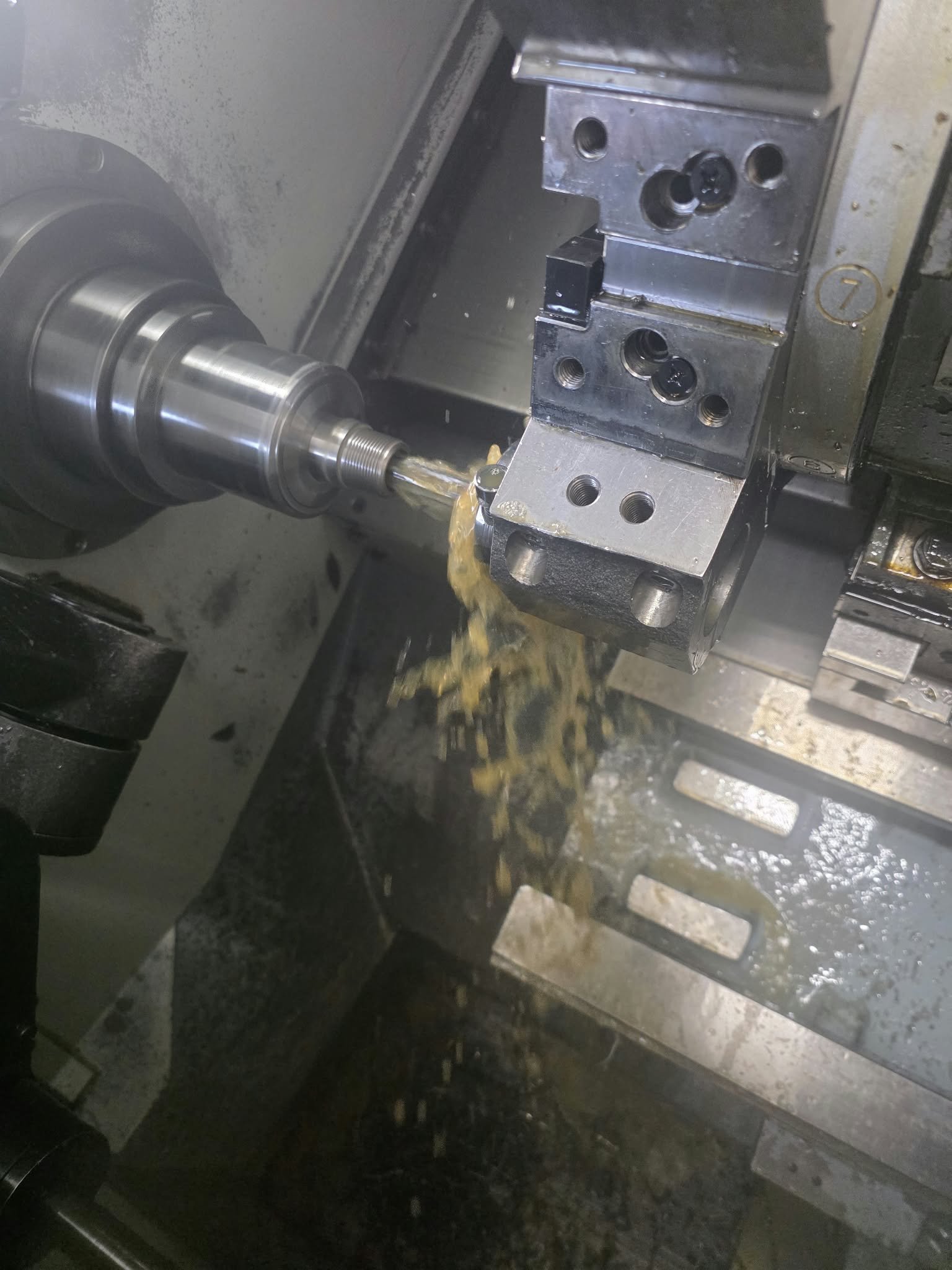
GUNSMITHING SERVICES: Short chambered barrel finishing&correction
Price range: $200.00 through $275.00
Description
It’s more common than one might think to have a chamber feature machined too short on a rifle. This can be by design or an oversite.
- It does happen (rare) with new firearms. Manufacturers will almost always warranty an issue like this, but that can take a while. We are often sought out as a faster alternative.
- The more common occurrence is during a barrel swap when a previously fitted barrel is transplanted to another action. Designs vary along with tolerances regardless of a thread diameter and pitch being identical between two action manufacturers.
- New barrels offered by some manufacturers are sold as “semi-finished.” Here, the threading and breech work are machined with the chamber intentionally left short/undersize.
- The idea is convenience as it would seem that all a gunsmith has to do is validate breech clearance and chase the roughed-out chamber with a finishing reamer. (“Roughed” is merely a term describing a chamber left intentionally undersize) Unfortunately, this is not always the case. I
- t’s been our experience that thread dimensioning may not always be compatible for a given receiver, even when transferring between two identical make/model actions. If the threads are oversize the barrel you paid good money for is highly unlikely to thread onto your receiver.
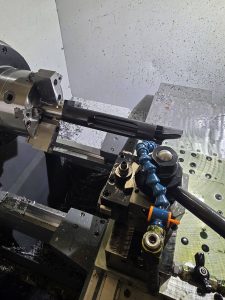
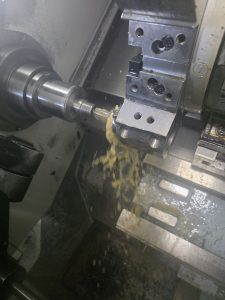
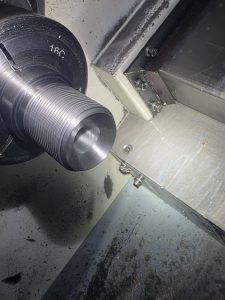
- The practice of “picking up” a thread and fitting it to a mating part is a machinist skill set only acquired through experience. It’s not hard to do, but it is extremely easy to underestimate and turn into an expensive mess. Doing this on a CNC lathe also has its share of challenges to solve so there is no free lunch. A barrel mistakenly cut too short is also relatively common. Fortunately, we have paid our dues, it’s not an issue for us.
Headspace:
A common theme in the GS trade is that tighter is better. While there is can be a grain of truth to this, it is not statutory. Setting headspace to the bare minimum is a common request as it does carry significant influence on the service life of shell casings being reloaded. Case growth is a consequence of shooting any firearm. If excessive, this expansion results in reduced brass service life as the material can only tolerate being resized so many times. But…
The loudest sound in a gunfight is “click.” A rifle must function within the envelope its intended for. A bench rest target rifle has a very different life compared to deployment guns sent to a middle eastern desert. The distinction between the two cannot be overstated. Assuming that related dimensions are correct, this is a pretty easy fix. It’s most often solved by chasing the existing chamber by hand using a finishing reamer. A few turns with moderate pressure and a little cutting oil are usually sufficient to correct a minor headspace issue. Here the bulk of the work goes into teardown and reassembly. Tools are not long enough to reach through the receiver bore. An extension to hold the ream can be used, but a chamber’s surface finish still requires attention afterwards. -Spinning a barreled action at a couple thousand RPM with an action attached, as you poke a metal rod loaded with emery cloth down the bore, is fertile soil for a potentially really bad day.
Additional information
| CHAMBER CORRECTION TYPE: | NEW SHORT CHAMBERED BARREL, HEADSPACE CORRECTION OF INSTALLED BARREL |
|---|
Related products
-
GUNSMITHING SERVICES: Tombstone recoil lug retrofit to Tikka action (inlcudes lug)
$175.00 Add to cart -
GUNSMITHING SERVICES: Barrel fluting
From $0.00 Configure -
GUNSMITHING SERVICES: Striker pin bushing install for bolt action rifle bolts
From $0.00 Configure -
GUNSMITHING SERVICES: Clip slotting M700 for M40 style optic base
$265.00 Select options This product has multiple variants. The options may be chosen on the product page