
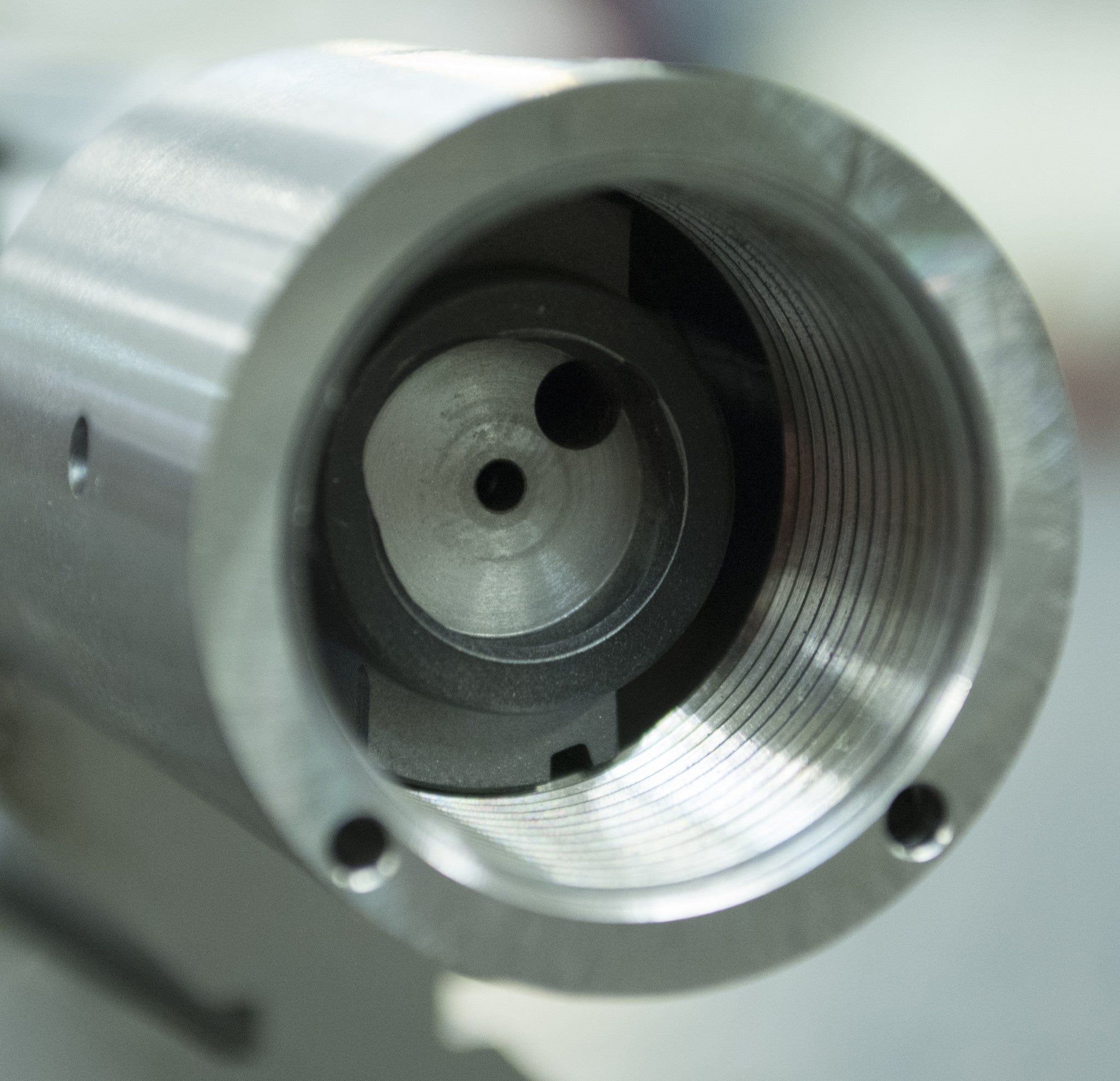
GUNSMITHING SERVICES: Receiver blueprinting
Price range: $250.00 through $400.00
Description
Blueprinting, or “truing an action,” is a specialized machining process designed to maximize the accuracy potential of a factory bolt-action rifle. While traditional blueprinting focuses strictly on squaring and aligning core components, we have expanded the service to include a number of functional so that your mass produced receiver begins to emulate what was once the exclusive domain of custom action manufacturers. Some of has nothing to do with making the rifle “more accurate.” Instead, it checks the box regarding detail work overlooked by the original manufacturer to elevate functionality.
LRI pioneered the use of CNC Vertical Machining Centers to blueprint bolt action receivers starting in 2009. From a very humble beginning, we’ve continually refined and improved the process to where our work can stand right along with many of the custom aftermarket receivers made today.
In 2013 we introduced another industry exclusive; Single stroke diamond-honed receiver bores. Honing ensures the receiver bore is round, taper-free, and void of inclusions. It also provides the qualified surface for our setup process in the milling center.
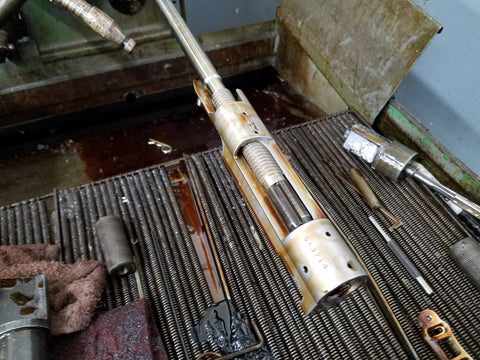
-Winchester Model 70 in process.
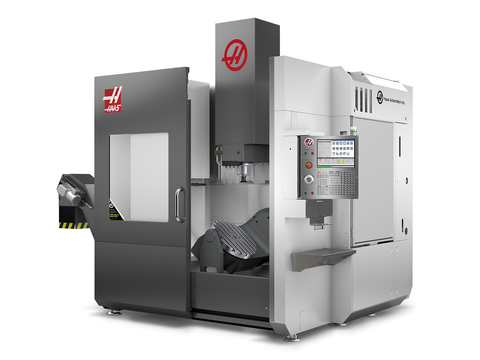
The final chapter arrived in 2019 when we added a true 5-axis milling center to our receiver and bolt blueprinting process. As far as we know, LRI is the only custom gunsmithing company using this level of technology for bolt action firearm accurizing.
-Haas UMC750 5-axis machining center
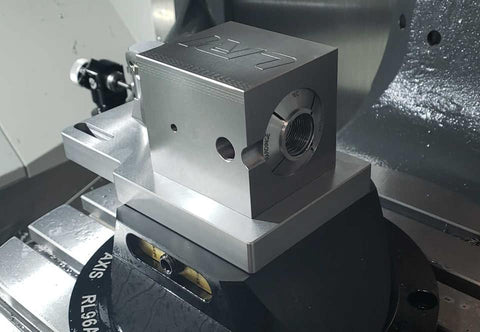
-M700 workholding
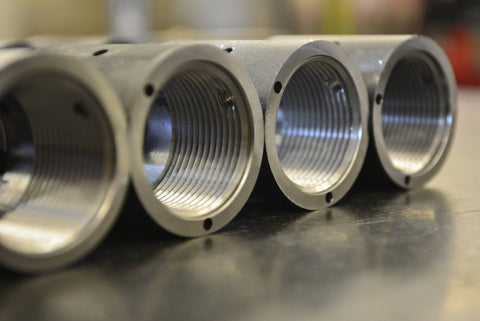
-Finished receivers, M700
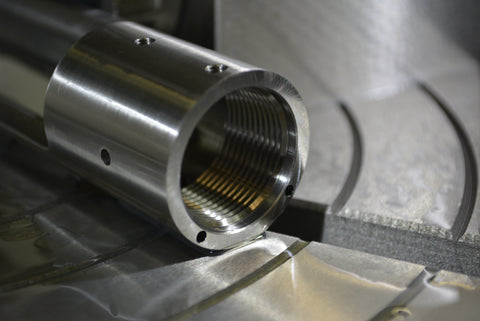
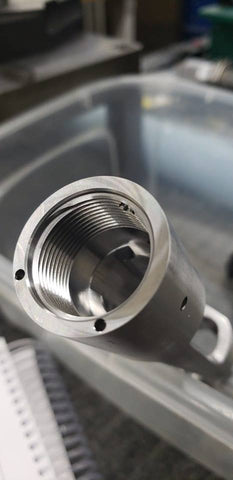
-M70 workholding
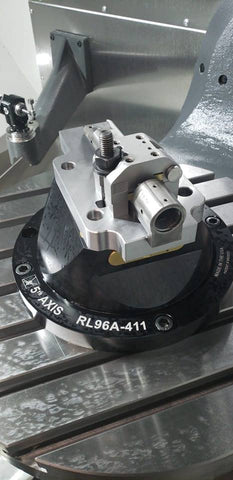
-Tier 1 Blueprint, Winchester Model 70
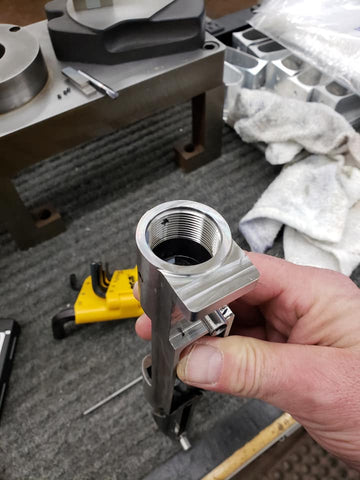
-Mauser 98 Receiver and workholding
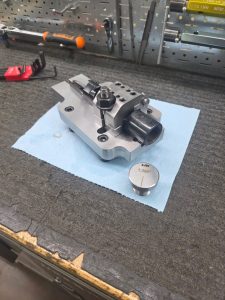
The receiver work is where it starts, but its only part of the process. Bolt accurizing and upgrades are fully automated using wireless probing combined with CNC toolpaths. In addition to the fundamental blueprinting operations, we can also offer several elective services; Striker pin bushings, altered bolt face diameters, M16 (and “mini 16”) extractors, dual ejectors, fluting, skeletonized handles, faceted bolt shrouds, our Time&TIG service, and now, billet bolt handles for the Remington M700 line of actions.
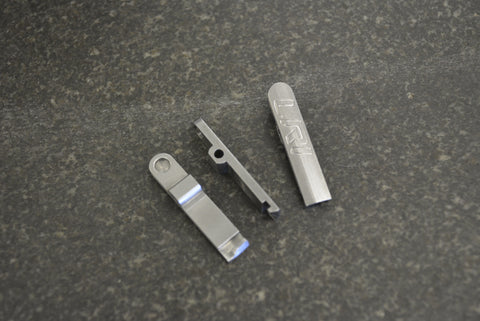
LRI makes its M16 extractors in-house. We do this to ensure a clean installation and to standardize the process. Our extractors are made from bar stock 4140 Chromoly, pre-heat treated, tool steel. We also machine our own direct replacement ejector pins from 17-4 stainless steel.
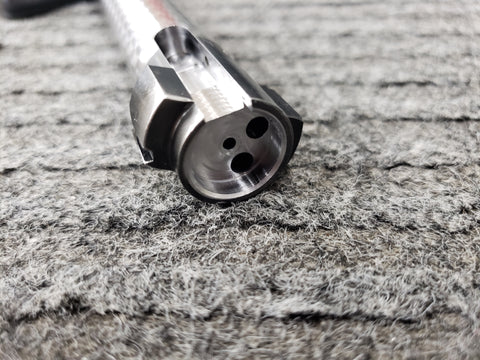
LRI Std M16 Extractor and Dual Ejector upgrade:
LRI M16 Extractors:
M16 extractor inlet for M700 bolt:
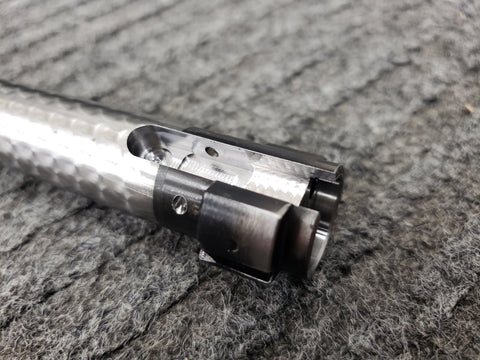
LRI Mini M16 Extractor upgrade:
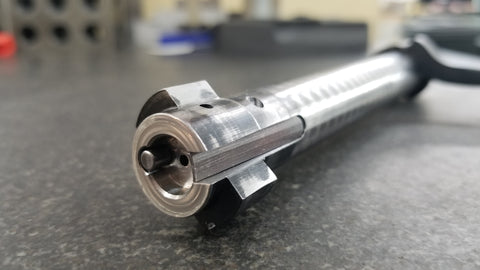
The result are features and levels of precision that were once the exclusive domain of custom actions.
Remington M700 Tier 1 Blueprinting Standardized Features:
- Single Stroke Diamond Honed ID receiver bore
- Higbee thread lead on receiver ring threads
- Receiver ring ID bored
- Thread milled receiver ring threads
- Reconditioned Receiver Lug Abutments
- Bolt nose resurfaced
- Bolt face resurfaced
- Bolt Lugs resurfaced
Remington M700 Tier 2 Blueprinting Standardized Features:
Retains OEM threads, used for Savage-type barrel nuts or “Remage” spanner nuts and/or for prefit type barrels.
- Single Stroke Diamond Honed ID receiver bore
- Reconditioned Receiver Lug Abutments
- Bolt nose resurfaced
- Bolt face resurfaced
- Bolt Lugs resurfaced
Optional Features and Services: (Both Remington Tier 1 & 2)
- Striker pin Bushing installation
- Time and TIG bolt handle
- Turn and added bushing for Striker Pin to .0625″
- Std M16 Extractor installation
- Mini M16 Extractor installation (.223 bolt face only)
- Dual ejector upgrade (not available for .390″ dia bolt face cartridges)
- Clip Slotting receiver for M40-A1 style lugged optic base
- LRI External side bolt release installation (SA/LA and LA with extended COAL magazine boxes)
- Pinned Recoil lug (limited to LRI lugs only)
- Wide variety of bolt fluting options
- Jeweled bolt body
- 8-40 optic base hole enlargement
- Fluted Bolt shrouds
- Skeletonized bolt handle
- Time and TIG OEM bolt handle service
- Time and TIG LRI Billet direct replacement M700 bolt handle upgrade/service
- Extended internal magazine modification
- AIAW magazine modification to the receiver
- Filling tang groove on M700 SS actions via TIG-welded silicon bronze
- Tactical bolt knob installation
- Single and multi-colored Cerakote application
- Parkerize coating application (limited to carbon steel actions only)
- Glass bead blast finish (limited to stainless actions only)
- Installation of aftermarket bolt handle
- Fitting aftermarket bolt to receiver
- Reconditioning factory recoil lug (ID bored and surface grinding both sides)
Winchester M70 Tier 1 Blueprinting Standard Features:
- Single Stroke Diamond Honed ID receiver bore
- Receiver ring face machined
- Recessed forward lug face
- 2.5* draft angle on the forward side of the lug, 4* side drafts, and .100″ corner radiuses avoid tearing up bedding when the receiver is removed from the stock.
- Thread rings opened up to 1-1/16-18 threads per inch. Adding circumference and increasing the thread pitch adds surface area to the threaded joint – a perfect complement to M70’s short tenon length.
- Truncated “Higbee” thread start
- Faced lug abutments
- All machined features either have chamfers or edge breaks
- Fully CNC machined in a single setup using true 5-axis machining capabilities.
- Conservative tool package greatly reduces tolerance stacking.
Winchester M70 Optional Features and Services:
- Striker pin Bushing installation
- Turn Striker Pin to .0625″
- Wide variety of bolt fluting options (CRF actions excluded)
- Jeweled bolt body
- 8-40 optic base hole enlargement
- Extended internal magazine modification
- Tactical bolt knob installation
- Single and multi-colored Cerakote application
- Parkerize coating application (limited to carbon steel actions only)
- Glass bead blast finish (limited to stainless actions only)
- Installation of an aftermarket bolt handle
M70 Receivers Currently Supported:
Winchester Pre-64 Model 70’s, all years in both CRF and pushfeed configuration.
M70 Blueprinting Process – IMPORTANT:
Winchester M70 receivers are a casting, this presents a unique challenge because clamping the action in the required manner causes the receiver to distort due to the irregular exterior. Part of our process is to “deck” the bottom of the action so that it is flat. Because of this, any finish on the bottom of the receiver is machined away. This makes carbon steel actions more vulnerable to corrosion. It is encouraged that your carbon steel M70 be refinished once it has completed this process.
M70 Receiver ring threads:
The threads on the M70s in the controlled round feed and push feed configurations are 1-16. One inch diameter, 16 threads per inch. The historical process of “cleaning” up existing threads on M70s as part of blueprinting takes a radical turn here at LRI.
The major diameter of the existing one-inch thread becomes the minor diameter when we enlarge them to 1.0625″-18. We do this because the M70 threaded barrel cylinder is quite short. What we are after is increased surface area to better support the barrel in the receiver. There’s no consequence because the receiver ring diameter is 1.350″. -The same as the vast majority of other action designs. The other advantage here is we are effectively waving a magic wand over the action by working with virgin material. In the same setup, we also project the receiver ring face .05″ and create a draft angle to the forward-facing surface of the recoil lug. This makes removal from a bedded rifle stock much easier and greatly reduces the risk of the action damaging the bedding material.
Proven Performance:
In the spring of 2013, LRI announced a very ambitious project to one of the toughest and most demanding precision rifle audiences in today’s shooting community: SnipersHide.com
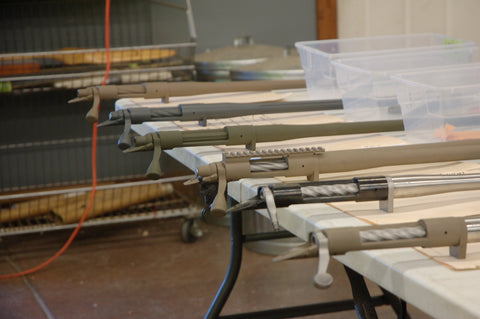
We began offering and accurized M700 barreled action service with an internet special. Since that time LRI’s “Sniper’s Hide M700 Accurized Barreled Action Group Buy” has grown into the largest and most continuous internet special in the history of the Sniper’s Hide website.
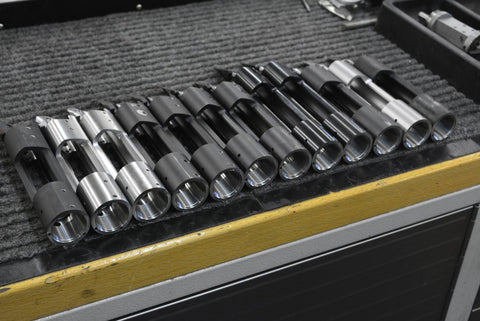
LRI has now produced in excess of ten thousand custom-built barreled actions and rifles for precision shooting enthusiasts. Our services have expanded to clients from all over the world. The success of the effort has ushered a new chapter of what is now possible.
You are in good hands.
5-axis Blueprinting the M700:
IMPORTANT:
Finish Limitations with bolts and receivers.
The work LRI performs when blueprinting an action is invasive and extensive. TIG welding and magnetic induction soldering involves the use of intensive heat. Coatings applied to the bolt must be removed to avoid contamination of the welded/soldered joint.
Because of this, your bolt will require refinishing. This cannot be avoided. LRI offers a full menu of finishing options to restore your bolt to pristine condition.
Dimensional limitations with receivers and bolts.
It is very common for LRI to rework an action that has been previously blueprinted by another shop. We are very comfortable with this in almost all circumstances, but there are limitations. Our blueprinting process allows us to preserve the OEM dimension of 1.150″ measured from the receiver ring face to the top of the lug abutments on M700 actions. With “unmolested” receivers this is no problem. Receivers that have had previous work may not allow for this. It is a case-by-case basis as it all depends on how much material was previously removed.
This can add to the cost as it may require program editing specific to your receiver/bolt combination.
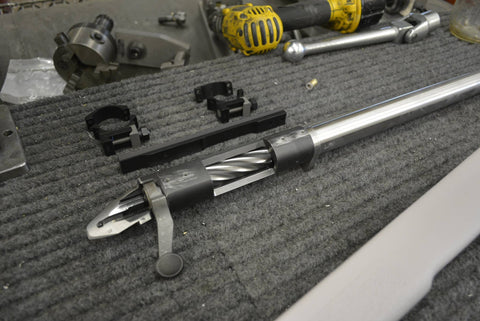
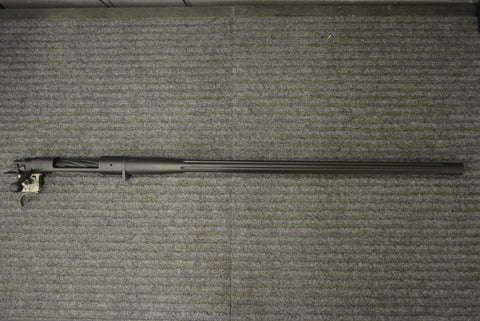
A fundamental of any machining operation is rigid and solid work holding, (clamping the part to the machine in a manner that prevents it from uncontrolled movement and vibration). LRI treats your property with great respect, however, there are limitations. We cannot guarantee that our fixtures will not cause marks to the surface finish of your parts. We are as careful as we can be, but collets and vices are made from tool-grade, heat-treated steels. They are hard and very tough by design. Because of this, your receiver may require refinishing. This cannot be avoided. LRI offers a full menu of finishing options that will restore your receiver to pristine condition.
Recoil lugs.
Our Tier 1 blueprinting service alters the factory M700 thread dimensions. They are enlarged to a value of 1.085″x16tpi. A factory/aftermarket recoil lug cannot be reinstalled without modification. We must ID bore the hole through the lug for the larger barrel tenon to fit through. This must be done when clients choose to use OEM or outsourced components. LRI also surface grinds all factory M700 lugs to bring the two sides to perfect parallelism. LRI recoil lugs are made this way from the start for a “drop-in” installation.
LRI limits the recoil lug pinning option to LRI-manufactured recoil lugs only. Our recoil lugs come standard with pin bores drilled/reamed during manufacturing. The market is saturated with a variety of aftermarket variations. Attempting to fixture and archive tool paths for every recoil lug in circulation isn’t realistic and setting up to pin a lug in manual equipment exceeds the cost of what our lugs are priced at. We offer our lugs in Chromoly, stainless, and 6AL-4V Titanium. They are finished to a nominal thickness of .250″ and contoured to match the OEM M700 outside shape so that they’ll fit in chassis-type stocks without alteration.
Additional information
| Weight | 3.0005 lbs |
|---|---|
| Receiver Make and Model | Remington M7, Remington M700 SA, Remington M700 LA, Remington 40x SA Centerfire, Remington XP Pistol, Remington 40x Rimfire, Remington M721, Remington M722, Winchester Model 70 Pre 64 Clover Tang, Winchester Model 70 Post 64, Winchester M70 375 H&H length, Winchester M70 Short action, Winchester M70 Classic, F&N Special Police M70 Clone SA, Mauser 98 small ring, Mauser 98 Large Ring |
Related products
-
GUNSMITHING SERVICES: Ruger RPR barrel removal and installation
$125.00 Add to cart -
GUNSMITHING SERVICES: AIAW magazine well modification to Rem M700 receiver
$150.00 Add to cart -
GUNSMITHING SERVICES: 3.9 ULTACH cheek hardware installation
Price range: $175.00 through $375.00 Select options This product has multiple variants. The options may be chosen on the product page -
GUNSMITHING SERVICES: Glass bead finishing.
Price range: $15.00 through $250.00 Select options This product has multiple variants. The options may be chosen on the product page